
 Donate
The People’s Lobby of Missouri is dedicated to uniting citizens across every corner of Missouri to restore Constitutional principles and reclaim government accountability.
educate, organize, and pressure for real change!
the mission
We strive to empower the people by organizing grassroots efforts to eliminate electronic voting machines, reinstate hand-counted paper ballots, and establish a statewide election holiday. We advocate for the abolition of property taxes and a comprehensive review of government rules to dismantle processes that shield it from accountability. By pooling the collective strength of Missourians, we aim to rival corporate lobbyists, vigilantly monitor government actions, and expose corruption through strategic marketing and relentless pressure, ensuring a government that serves the people and upholds the Constitution.
The People’s Lobby of Missouri is dedicated to uniting citizens across every corner of Missouri to restore Constitutional principles and reclaim government accountability.
the mission
educate, organize, and pressure for real change!
We strive to empower the people by organizing grassroots efforts to eliminate electronic voting machines, reinstate hand-counted paper ballots, and establish a statewide election holiday. We advocate for the abolition of property taxes and a comprehensive review of government rules to dismantle processes that shield it from accountability. By pooling the collective strength of Missourians, we aim to rival corporate lobbyists, vigilantly monitor government actions, and expose corruption through strategic marketing and relentless pressure, ensuring a government that serves the people and upholds the Constitution.
the mission
The People’s Lobby of Missouri is dedicated to uniting citizens across every corner of Missouri to restore Constitutional principles and reclaim government accountability.
educate, organize, & pressure for change!
We strive to empower the people by organizing grassroots efforts to eliminate electronic voting machines, reinstate hand-counted paper ballots, and establish a statewide election holiday. We advocate for the abolition of property taxes and a comprehensive review of government rules to dismantle processes that shield it from accountability. By pooling the collective strength of Missourians, we aim to rival corporate lobbyists, vigilantly monitor government actions, and expose corruption through strategic marketing and relentless pressure, ensuring a government that serves the people and upholds the Constitution.
Become a People’s Lobby of Missouri Member
Why The Join People’s Lobby MO?

The Power of The People:
We believe in the inherent duty of citizens to hold our government accountable. By pooling our resources, we amplify our voice to demand transparency and fairness—without relying on any single politician.

Change from the Outside In:
Swapping out politicians in a broken system is a fool’s errand. We tackle the root issues head-on by educating the public about systemic flaws and pressuring elected officials to act in our interests.

A Movement, Not a Moment:
Through grassroots organization and strategic marketing, we’re building a movement that grows stronger with every member. Your involvement fuels our ability to educate, mobilize, and effect change—first from the outside, then transforming the system from within.

Time Is Running Out:
As technology advances and challenges mount, the window to act is closing. Join us now to shape a future where The People, not special interests, call the shots.
Become a People’s Lobby of Missouri Member
Why The Lobby?
The Power of The People:
We believe in the inherent duty of citizens to hold our government accountable. By pooling our resources, we amplify our voice to demand transparency and fairness—without relying on any single politician.
Change from the Outside In:
Swapping out politicians in a broken system is a fool’s errand. We tackle the root issues head-on by educating the public about systemic flaws and pressuring elected officials to act in our interests.
A Movement, Not a Moment:
Through grassroots organization and strategic marketing, we’re building a movement that grows stronger with every member. Your involvement fuels our ability to educate, mobilize, and effect change—first from the outside, then transforming the system from within.
Time Is Running Out:
As technology advances and challenges mount, the window to act is closing. Join us now to shape a future where The People, not special interests, call the shots.
Become a Member
Why Join People’s Lobby MO?
The Power of The People:
We believe in the inherent duty of citizens to hold our government accountable. By pooling our resources, we amplify our voice to demand transparency and fairness—without relying on any single politician.
Change from the Outside In:
Swapping out politicians in a broken system is a fool’s errand. We tackle the root issues head-on by educating the public about systemic flaws and pressuring elected officials to act in our interests.
A Movement, Not a Moment:
Through grassroots organization and strategic marketing, we’re building a movement that grows stronger with every member. Your involvement fuels our ability to educate, mobilize, and effect change—first from the outside, then transforming the system from within.
Time Is Running Out:
As technology advances and challenges mount, the window to act is closing. Join us now to shape a future where The People, not special interests, call the shots.
Empower Change: Educate, Organize, Reform!
issues we care about
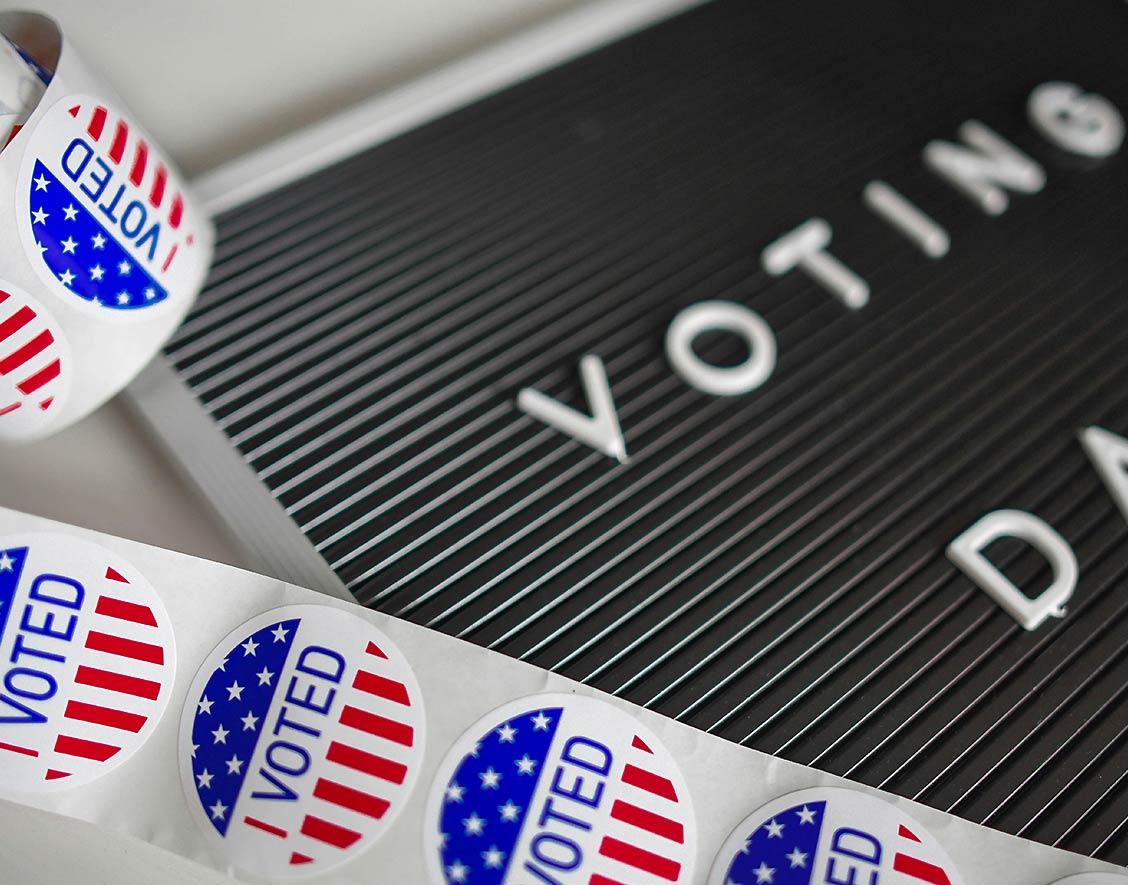
Remove the Machines, Return to Handcounting Paper Ballots
The case for removing electronic voting machines in Missouri and returning to hand-counted paper ballots is rooted in both public sentiment and fundamental concerns about electoral integrity. Polls, such as those conducted by Rasmussen, consistently show that a significant portion of the American public lacks confidence in electronic voting machines. This widespread distrust undermines the democratic process, as faith in the accuracy and security of elections is essential for a functioning republic. Voting is the most sacred right of Americans, the cornerstone of self-governance, and any system that erodes trust in that process threatens the legitimacy of the outcomes. When citizens question whether their votes are accurately counted, the very foundation of democracy is at risk.
A critical issue with electronic voting machines is their questionable legal standing. Many of these machines, including those used in Missouri, have been found to lack proper certification under federal and state standards, as required by law. The moment a voter inserts their ballot into an uncertified tabulator, their vote is disenfranchised, as the machine’s output cannot be guaranteed to reflect their intent. This is not a minor technicality but a systemic flaw that compromises the entire electoral process. Hand-counted paper ballots, by contrast, provide a tangible, verifiable record of each vote, ensuring that every citizen’s voice is preserved without reliance on opaque technology.
Moreover, it is widely acknowledged that electronic voting machines are vulnerable to manipulation. Cybersecurity experts have demonstrated that these systems can be hacked, altered, or misconfigured, whether through external interference or internal errors. Unlike electronic systems, which often rely on proprietary software that is difficult to scrutinize, hand-counting paper ballots is transparent and accessible to public oversight. While no system is entirely immune to error or fraud, paper ballots allow for straightforward verification through manual recounts, a process that is far more difficult with electronic systems due to their lack of a verifiable paper trail in many cases. Missouri’s current electronic voting mechanisms also face challenges in auditability, as the complexity of the systems often obscures whether the recorded results match the voters’ intent. Returning to hand-counted paper ballots would restore a direct, auditable process that prioritizes transparency and accountability, ensuring that Missouri’s elections truly reflect the will of the people.

Rein in DESE, Eliminate Woke Practices, Get Back to Basics
Education reform at the state level in Missouri is urgently needed to address the overreach of the Missouri Department of Elementary and Secondary Education (MODESE), eliminate divisive ideological practices, and refocus on foundational learning. While President Trump’s efforts to dismantle and reorganize the federal Department of Education aim to restore authority to the states, Missouri’s education system remains hampered by MODESE’s centralized control. This bureaucratic entity wields immense power, often infringing on the autonomy of local school districts. Local control is a cornerstone of effective education, allowing communities to tailor curricula and policies to their unique needs and values. However, MODESE’s top-down approach stifles this flexibility, imposing mandates that prioritize compliance over student outcomes and undermining the ability of local educators and parents to make decisions that best serve their children.
One of the most concerning issues is MODESE’s role in pushing “woke” practices, such as Social-Emotional Learning (SEL) and Diversity, Equity, and Inclusion (DEI) initiatives, which many argue distract from core academic priorities. These mandates often require teachers to dedicate significant time to ideological frameworks rather than focusing on essential skills like reading, writing, math, and critical thinking. By enforcing these policies, MODESE diverts resources and attention from the basics that prepare students for practical success. The emphasis on SEL and DEI, often seen as rooted in progressive ideology, has sparked backlash from parents and educators who believe schools should prioritize academic rigor over social engineering. Eliminating these practices would allow schools to refocus on equipping students with the knowledge and skills needed to thrive in a competitive world.
Reforming Missouri’s education system requires reining in MODESE’s unchecked authority and restoring decision-making power to local school districts. Communities should have the freedom to design curricula that reflect their values and meet the needs of their students, whether that means emphasizing vocational training, advanced academics, or other locally relevant priorities. By reducing MODESE’s burdensome mandates and eliminating ideologically driven policies, Missouri can get back to the basics of education—ensuring students master fundamental skills that prepare them for life. This shift would align with the broader goal of empowering states to take charge of their education systems, fostering innovation and accountability at the local level while honoring the principle that parents and communities, not distant bureaucrats, know what’s best for their children.
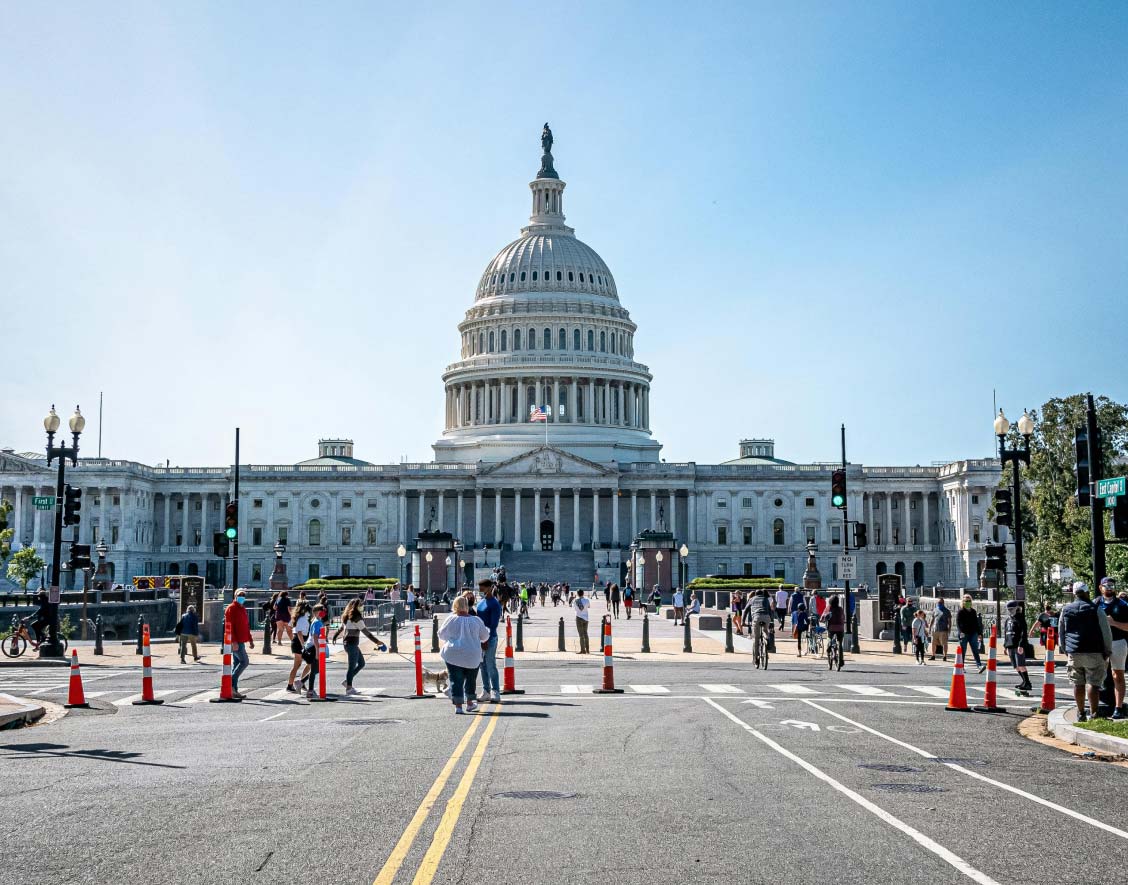
Comprehensive Review of the Budget, Push For Tax Cuts
Missouri’s recent passage of a $53.5 billion state budget, the largest in its history, underscores the urgent need for a comprehensive review of spending and a robust push for tax cuts, particularly on personal property taxes. This bloated budget raises serious concerns about fiscal sustainability, as Missouri’s spending trajectory appears increasingly unsustainable. For context, Illinois, with a population of approximately 12.6 million—roughly double Missouri’s 6.2 million—has a state budget of about $56 billion for FY 2025, only marginally higher than Missouri’s. This means Missouri is spending at a per-capita rate far closer to Illinois than its population or economic base justifies. Such disproportionate spending demands a thorough audit to identify inefficiencies, eliminate waste, and ensure taxpayer dollars are used effectively, rather than fueling unchecked bureaucratic growth.
A significant issue is the practice of legislators using the budget as a tool to advance policy agendas, effectively legislating through appropriations. This approach, often referred to as “budget bill legislating,” allows lawmakers to embed controversial or unvetted policies into must-pass budget bills, bypassing the transparency and debate of the normal legislative process. This undermines accountability and bloats the budget with initiatives that may not align with Missourians’ priorities. For example, the $53.5 billion budget includes hundreds of millions for capital improvements, such as $55 million for upgrades to the Missouri State Capitol, which, while important, adds to the strain on taxpayers already grappling with rising costs. A comprehensive budget review would expose such practices, ensuring that spending aligns with core state needs like infrastructure, education, and public safety, rather than serving as a vehicle for political maneuvering.
The push for tax cuts, especially on personal property taxes, is critical to prevent Missourians from being taxed out of their homes and livelihoods. Governor Mike Kehoe and the state tax commission’s decision to mandate property assessment increases by 75 assessors has significantly raised property tax burdens, hitting homeowners and small businesses hard. Personal property taxes, which include taxes on vehicles and other assets, are particularly regressive, disproportionately affecting middle- and lower-income families. Recent legislative efforts, such as a bill allowing a 100% deduction of capital gains income from state taxes, show some commitment to tax relief, but they fall short of addressing the broader tax burden. Missouri’s tax structure, already made more regressive by reductions in income tax rates coupled with higher local sales taxes, needs reform to prioritize relief for everyday Missourians. Cutting personal property taxes would provide immediate relief, stimulate local economies, and signal a commitment to fiscal responsibility. Without a serious review of the budget and meaningful tax cuts, Missouri risks driving residents and businesses away, threatening the state’s long-term economic health.

Dismantle Broken Processes, Expose Corruption
Missouri’s government is plagued by broken processes that shield the establishment and entrench corruption, necessitating a fundamental dismantling of these systems to restore accountability and serve the people. The current structure of the Missouri General Assembly concentrates power in the hands of the Speaker of the House and the Senate President Pro Tem, who wield supreme authority over legislative proceedings. This centralization strips rank-and-file representatives and senators of their ability to effectively advocate for their constituents, as key decisions about committee assignments and bill advancement are controlled by a select few. This setup ensures that the legislative process prioritizes the interests of the establishment over the needs of Missourians, undermining the democratic principle that elected officials should represent the will of the people.
Corruption festers within this system, often driven by conflicts of interest that pervade the legislature. Following the money reveals that a majority of Missouri legislators have at least one conflict of interest, whether through business ties, lobbying relationships, or campaign contributions from special interest groups. For instance, Senate Bill 4 (SB4), passed in recent years, exemplifies how legislation often benefits powerful entities like utilities at the expense of ordinary citizens. SB4 granted utilities significant leeway to raise rates and bypass oversight, burdening Missourians with higher costs while protecting corporate interests. Such outcomes are not anomalies but symptoms of a system where special interests hold sway, as legislators with financial or personal ties to these groups prioritize their agendas over public welfare. A comprehensive overhaul is needed to expose and eliminate these conflicts, ensuring that lawmakers serve their constituents, not their own interests or those of well-funded lobbyists.
The process of committee assignments further entrenches this corruption, as the Speaker and Senate Pro Tem handpick committee members to align with their preferred outcomes, effectively rigging the legislative session before it begins. This practice allows leadership to kill bills that reflect the public’s demands—such as those addressing tax relief or government transparency—while fast-tracking legislation that benefits special interests. By controlling which bills reach the floor, leadership ensures that the establishment’s priorities prevail, often at the expense of Missourians’ economic and social well-being. Dismantling these broken processes requires reforms like decentralizing power, implementing stricter conflict-of-interest rules, and increasing transparency in committee assignments and lobbying influence. Only by exposing and rooting out corruption can Missouri’s government be realigned to serve the people, restoring trust in a system that currently operates to protect the powerful.
Empower Change: Educate, Organize, Reform!
issues we care about
Remove the Machines, Return to Handcounting Paper Ballots
The case for removing electronic voting machines in Missouri and returning to hand-counted paper ballots is rooted in both public sentiment and fundamental concerns about electoral integrity. Polls, such as those conducted by Rasmussen, consistently show that a significant portion of the American public lacks confidence in electronic voting machines. This widespread distrust undermines the democratic process, as faith in the accuracy and security of elections is essential for a functioning republic. Voting is the most sacred right of Americans, the cornerstone of self-governance, and any system that erodes trust in that process threatens the legitimacy of the outcomes. When citizens question whether their votes are accurately counted, the very foundation of democracy is at risk.
A critical issue with electronic voting machines is their questionable legal standing. Many of these machines, including those used in Missouri, have been found to lack proper certification under federal and state standards, as required by law. The moment a voter inserts their ballot into an uncertified tabulator, their vote is disenfranchised, as the machine’s output cannot be guaranteed to reflect their intent. This is not a minor technicality but a systemic flaw that compromises the entire electoral process. Hand-counted paper ballots, by contrast, provide a tangible, verifiable record of each vote, ensuring that every citizen’s voice is preserved without reliance on opaque technology.
Moreover, it is widely acknowledged that electronic voting machines are vulnerable to manipulation. Cybersecurity experts have demonstrated that these systems can be hacked, altered, or misconfigured, whether through external interference or internal errors. Unlike electronic systems, which often rely on proprietary software that is difficult to scrutinize, hand-counting paper ballots is transparent and accessible to public oversight. While no system is entirely immune to error or fraud, paper ballots allow for straightforward verification through manual recounts, a process that is far more difficult with electronic systems due to their lack of a verifiable paper trail in many cases. Missouri’s current electronic voting mechanisms also face challenges in auditability, as the complexity of the systems often obscures whether the recorded results match the voters’ intent. Returning to hand-counted paper ballots would restore a direct, auditable process that prioritizes transparency and accountability, ensuring that Missouri’s elections truly reflect the will of the people.
Rein in DESE, Eliminate Woke Practices, Get Back to Basics
Education reform at the state level in Missouri is urgently needed to address the overreach of the Missouri Department of Elementary and Secondary Education (MODESE), eliminate divisive ideological practices, and refocus on foundational learning. While President Trump’s efforts to dismantle and reorganize the federal Department of Education aim to restore authority to the states, Missouri’s education system remains hampered by MODESE’s centralized control. This bureaucratic entity wields immense power, often infringing on the autonomy of local school districts. Local control is a cornerstone of effective education, allowing communities to tailor curricula and policies to their unique needs and values. However, MODESE’s top-down approach stifles this flexibility, imposing mandates that prioritize compliance over student outcomes and undermining the ability of local educators and parents to make decisions that best serve their children.
One of the most concerning issues is MODESE’s role in pushing “woke” practices, such as Social-Emotional Learning (SEL) and Diversity, Equity, and Inclusion (DEI) initiatives, which many argue distract from core academic priorities. These mandates often require teachers to dedicate significant time to ideological frameworks rather than focusing on essential skills like reading, writing, math, and critical thinking. By enforcing these policies, MODESE diverts resources and attention from the basics that prepare students for practical success. The emphasis on SEL and DEI, often seen as rooted in progressive ideology, has sparked backlash from parents and educators who believe schools should prioritize academic rigor over social engineering. Eliminating these practices would allow schools to refocus on equipping students with the knowledge and skills needed to thrive in a competitive world.
Reforming Missouri’s education system requires reining in MODESE’s unchecked authority and restoring decision-making power to local school districts. Communities should have the freedom to design curricula that reflect their values and meet the needs of their students, whether that means emphasizing vocational training, advanced academics, or other locally relevant priorities. By reducing MODESE’s burdensome mandates and eliminating ideologically driven policies, Missouri can get back to the basics of education—ensuring students master fundamental skills that prepare them for life. This shift would align with the broader goal of empowering states to take charge of their education systems, fostering innovation and accountability at the local level while honoring the principle that parents and communities, not distant bureaucrats, know what’s best for their children.
Comprehensive Review of the Budget, Push For Tax Cuts
Missouri’s recent passage of a $53.5 billion state budget, the largest in its history, underscores the urgent need for a comprehensive review of spending and a robust push for tax cuts, particularly on personal property taxes. This bloated budget raises serious concerns about fiscal sustainability, as Missouri’s spending trajectory appears increasingly unsustainable. For context, Illinois, with a population of approximately 12.6 million—roughly double Missouri’s 6.2 million—has a state budget of about $56 billion for FY 2025, only marginally higher than Missouri’s. This means Missouri is spending at a per-capita rate far closer to Illinois than its population or economic base justifies. Such disproportionate spending demands a thorough audit to identify inefficiencies, eliminate waste, and ensure taxpayer dollars are used effectively, rather than fueling unchecked bureaucratic growth.
A significant issue is the practice of legislators using the budget as a tool to advance policy agendas, effectively legislating through appropriations. This approach, often referred to as “budget bill legislating,” allows lawmakers to embed controversial or unvetted policies into must-pass budget bills, bypassing the transparency and debate of the normal legislative process. This undermines accountability and bloats the budget with initiatives that may not align with Missourians’ priorities. For example, the $53.5 billion budget includes hundreds of millions for capital improvements, such as $55 million for upgrades to the Missouri State Capitol, which, while important, adds to the strain on taxpayers already grappling with rising costs. A comprehensive budget review would expose such practices, ensuring that spending aligns with core state needs like infrastructure, education, and public safety, rather than serving as a vehicle for political maneuvering.
The push for tax cuts, especially on personal property taxes, is critical to prevent Missourians from being taxed out of their homes and livelihoods. Governor Mike Kehoe and the state tax commission’s decision to mandate property assessment increases by 75 assessors has significantly raised property tax burdens, hitting homeowners and small businesses hard. Personal property taxes, which include taxes on vehicles and other assets, are particularly regressive, disproportionately affecting middle- and lower-income families. Recent legislative efforts, such as a bill allowing a 100% deduction of capital gains income from state taxes, show some commitment to tax relief, but they fall short of addressing the broader tax burden. Missouri’s tax structure, already made more regressive by reductions in income tax rates coupled with higher local sales taxes, needs reform to prioritize relief for everyday Missourians. Cutting personal property taxes would provide immediate relief, stimulate local economies, and signal a commitment to fiscal responsibility. Without a serious review of the budget and meaningful tax cuts, Missouri risks driving residents and businesses away, threatening the state’s long-term economic health.
Dismantle Broken Processes, Expose Corruption
Missouri’s government is plagued by broken processes that shield the establishment and entrench corruption, necessitating a fundamental dismantling of these systems to restore accountability and serve the people. The current structure of the Missouri General Assembly concentrates power in the hands of the Speaker of the House and the Senate President Pro Tem, who wield supreme authority over legislative proceedings. This centralization strips rank-and-file representatives and senators of their ability to effectively advocate for their constituents, as key decisions about committee assignments and bill advancement are controlled by a select few. This setup ensures that the legislative process prioritizes the interests of the establishment over the needs of Missourians, undermining the democratic principle that elected officials should represent the will of the people.
Corruption festers within this system, often driven by conflicts of interest that pervade the legislature. Following the money reveals that a majority of Missouri legislators have at least one conflict of interest, whether through business ties, lobbying relationships, or campaign contributions from special interest groups. For instance, Senate Bill 4 (SB4), passed in recent years, exemplifies how legislation often benefits powerful entities like utilities at the expense of ordinary citizens. SB4 granted utilities significant leeway to raise rates and bypass oversight, burdening Missourians with higher costs while protecting corporate interests. Such outcomes are not anomalies but symptoms of a system where special interests hold sway, as legislators with financial or personal ties to these groups prioritize their agendas over public welfare. A comprehensive overhaul is needed to expose and eliminate these conflicts, ensuring that lawmakers serve their constituents, not their own interests or those of well-funded lobbyists.
The process of committee assignments further entrenches this corruption, as the Speaker and Senate Pro Tem handpick committee members to align with their preferred outcomes, effectively rigging the legislative session before it begins. This practice allows leadership to kill bills that reflect the public’s demands—such as those addressing tax relief or government transparency—while fast-tracking legislation that benefits special interests. By controlling which bills reach the floor, leadership ensures that the establishment’s priorities prevail, often at the expense of Missourians’ economic and social well-being. Dismantling these broken processes requires reforms like decentralizing power, implementing stricter conflict-of-interest rules, and increasing transparency in committee assignments and lobbying influence. Only by exposing and rooting out corruption can Missouri’s government be realigned to serve the people, restoring trust in a system that currently operates to protect the powerful.
Empower Change: Educate, Organize, Reform!
issues we care about
Remove the Machines, Return to Handcounting Paper Ballots
The case for removing electronic voting machines in Missouri and returning to hand-counted paper ballots is rooted in both public sentiment and fundamental concerns about electoral integrity. Polls, such as those conducted by Rasmussen, consistently show that a significant portion of the American public lacks confidence in electronic voting machines. This widespread distrust undermines the democratic process, as faith in the accuracy and security of elections is essential for a functioning republic. Voting is the most sacred right of Americans, the cornerstone of self-governance, and any system that erodes trust in that process threatens the legitimacy of the outcomes. When citizens question whether their votes are accurately counted, the very foundation of democracy is at risk.
A critical issue with electronic voting machines is their questionable legal standing. Many of these machines, including those used in Missouri, have been found to lack proper certification under federal and state standards, as required by law. The moment a voter inserts their ballot into an uncertified tabulator, their vote is disenfranchised, as the machine’s output cannot be guaranteed to reflect their intent. This is not a minor technicality but a systemic flaw that compromises the entire electoral process. Hand-counted paper ballots, by contrast, provide a tangible, verifiable record of each vote, ensuring that every citizen’s voice is preserved without reliance on opaque technology.
Moreover, it is widely acknowledged that electronic voting machines are vulnerable to manipulation. Cybersecurity experts have demonstrated that these systems can be hacked, altered, or misconfigured, whether through external interference or internal errors. Unlike electronic systems, which often rely on proprietary software that is difficult to scrutinize, hand-counting paper ballots is transparent and accessible to public oversight. While no system is entirely immune to error or fraud, paper ballots allow for straightforward verification through manual recounts, a process that is far more difficult with electronic systems due to their lack of a verifiable paper trail in many cases. Missouri’s current electronic voting mechanisms also face challenges in auditability, as the complexity of the systems often obscures whether the recorded results match the voters’ intent. Returning to hand-counted paper ballots would restore a direct, auditable process that prioritizes transparency and accountability, ensuring that Missouri’s elections truly reflect the will of the people.
Rein in DESE, Eliminate Woke Practices, Get Back to Basics
Education reform at the state level in Missouri is urgently needed to address the overreach of the Missouri Department of Elementary and Secondary Education (MODESE), eliminate divisive ideological practices, and refocus on foundational learning. While President Trump’s efforts to dismantle and reorganize the federal Department of Education aim to restore authority to the states, Missouri’s education system remains hampered by MODESE’s centralized control. This bureaucratic entity wields immense power, often infringing on the autonomy of local school districts. Local control is a cornerstone of effective education, allowing communities to tailor curricula and policies to their unique needs and values. However, MODESE’s top-down approach stifles this flexibility, imposing mandates that prioritize compliance over student outcomes and undermining the ability of local educators and parents to make decisions that best serve their children.
One of the most concerning issues is MODESE’s role in pushing “woke” practices, such as Social-Emotional Learning (SEL) and Diversity, Equity, and Inclusion (DEI) initiatives, which many argue distract from core academic priorities. These mandates often require teachers to dedicate significant time to ideological frameworks rather than focusing on essential skills like reading, writing, math, and critical thinking. By enforcing these policies, MODESE diverts resources and attention from the basics that prepare students for practical success. The emphasis on SEL and DEI, often seen as rooted in progressive ideology, has sparked backlash from parents and educators who believe schools should prioritize academic rigor over social engineering. Eliminating these practices would allow schools to refocus on equipping students with the knowledge and skills needed to thrive in a competitive world.
Reforming Missouri’s education system requires reining in MODESE’s unchecked authority and restoring decision-making power to local school districts. Communities should have the freedom to design curricula that reflect their values and meet the needs of their students, whether that means emphasizing vocational training, advanced academics, or other locally relevant priorities. By reducing MODESE’s burdensome mandates and eliminating ideologically driven policies, Missouri can get back to the basics of education—ensuring students master fundamental skills that prepare them for life. This shift would align with the broader goal of empowering states to take charge of their education systems, fostering innovation and accountability at the local level while honoring the principle that parents and communities, not distant bureaucrats, know what’s best for their children.
Comprehensive Review of the Budget, Push For Tax Cuts
Missouri’s recent passage of a $53.5 billion state budget, the largest in its history, underscores the urgent need for a comprehensive review of spending and a robust push for tax cuts, particularly on personal property taxes. This bloated budget raises serious concerns about fiscal sustainability, as Missouri’s spending trajectory appears increasingly unsustainable. For context, Illinois, with a population of approximately 12.6 million—roughly double Missouri’s 6.2 million—has a state budget of about $56 billion for FY 2025, only marginally higher than Missouri’s. This means Missouri is spending at a per-capita rate far closer to Illinois than its population or economic base justifies. Such disproportionate spending demands a thorough audit to identify inefficiencies, eliminate waste, and ensure taxpayer dollars are used effectively, rather than fueling unchecked bureaucratic growth.
A significant issue is the practice of legislators using the budget as a tool to advance policy agendas, effectively legislating through appropriations. This approach, often referred to as “budget bill legislating,” allows lawmakers to embed controversial or unvetted policies into must-pass budget bills, bypassing the transparency and debate of the normal legislative process. This undermines accountability and bloats the budget with initiatives that may not align with Missourians’ priorities. For example, the $53.5 billion budget includes hundreds of millions for capital improvements, such as $55 million for upgrades to the Missouri State Capitol, which, while important, adds to the strain on taxpayers already grappling with rising costs. A comprehensive budget review would expose such practices, ensuring that spending aligns with core state needs like infrastructure, education, and public safety, rather than serving as a vehicle for political maneuvering.
The push for tax cuts, especially on personal property taxes, is critical to prevent Missourians from being taxed out of their homes and livelihoods. Governor Mike Kehoe and the state tax commission’s decision to mandate property assessment increases by 75 assessors has significantly raised property tax burdens, hitting homeowners and small businesses hard. Personal property taxes, which include taxes on vehicles and other assets, are particularly regressive, disproportionately affecting middle- and lower-income families. Recent legislative efforts, such as a bill allowing a 100% deduction of capital gains income from state taxes, show some commitment to tax relief, but they fall short of addressing the broader tax burden. Missouri’s tax structure, already made more regressive by reductions in income tax rates coupled with higher local sales taxes, needs reform to prioritize relief for everyday Missourians. Cutting personal property taxes would provide immediate relief, stimulate local economies, and signal a commitment to fiscal responsibility. Without a serious review of the budget and meaningful tax cuts, Missouri risks driving residents and businesses away, threatening the state’s long-term economic health.
Dismantle Broken Processes, Expose Corruption
Missouri’s government is plagued by broken processes that shield the establishment and entrench corruption, necessitating a fundamental dismantling of these systems to restore accountability and serve the people. The current structure of the Missouri General Assembly concentrates power in the hands of the Speaker of the House and the Senate President Pro Tem, who wield supreme authority over legislative proceedings. This centralization strips rank-and-file representatives and senators of their ability to effectively advocate for their constituents, as key decisions about committee assignments and bill advancement are controlled by a select few. This setup ensures that the legislative process prioritizes the interests of the establishment over the needs of Missourians, undermining the democratic principle that elected officials should represent the will of the people.
Corruption festers within this system, often driven by conflicts of interest that pervade the legislature. Following the money reveals that a majority of Missouri legislators have at least one conflict of interest, whether through business ties, lobbying relationships, or campaign contributions from special interest groups. For instance, Senate Bill 4 (SB4), passed in recent years, exemplifies how legislation often benefits powerful entities like utilities at the expense of ordinary citizens. SB4 granted utilities significant leeway to raise rates and bypass oversight, burdening Missourians with higher costs while protecting corporate interests. Such outcomes are not anomalies but symptoms of a system where special interests hold sway, as legislators with financial or personal ties to these groups prioritize their agendas over public welfare. A comprehensive overhaul is needed to expose and eliminate these conflicts, ensuring that lawmakers serve their constituents, not their own interests or those of well-funded lobbyists.
The process of committee assignments further entrenches this corruption, as the Speaker and Senate Pro Tem handpick committee members to align with their preferred outcomes, effectively rigging the legislative session before it begins. This practice allows leadership to kill bills that reflect the public’s demands—such as those addressing tax relief or government transparency—while fast-tracking legislation that benefits special interests. By controlling which bills reach the floor, leadership ensures that the establishment’s priorities prevail, often at the expense of Missourians’ economic and social well-being. Dismantling these broken processes requires reforms like decentralizing power, implementing stricter conflict-of-interest rules, and increasing transparency in committee assignments and lobbying influence. Only by exposing and rooting out corruption can Missouri’s government be realigned to serve the people, restoring trust in a system that currently operates to protect the powerful.
join the lobby
Join the people of missouri fighting for their rights and state’s sovereignty.
join the lobby
Join the people of missouri fighting for their rights and state’s sovereignty.


