Donate
Missouri Election Authorities Don’t Get to Rewrite Their Job Descriptions
By any plain reading of Missouri law, county election authorities have one job that stands above all others: ensure every legal vote is counted. Not some. Not most. Not only the ones the technology recognizes. Every legal vote.
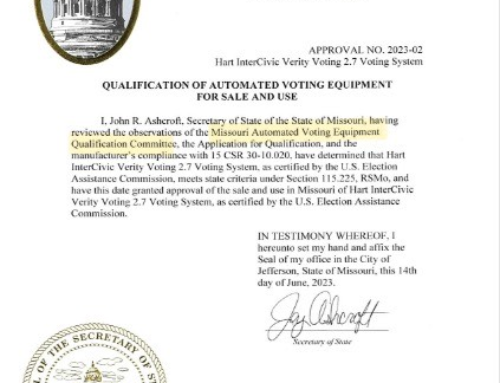
Yet county election officials are defending the use of electronic tabulators that they openly acknowledge do not count all legally cast votes. The justification? A statute—RSMo 115.225—that doesn’t govern them at all. It governs the Secretary of State.
This is not a minor misunderstanding. It is a fundamental misapplication of the law.
The Law Is Clear About Who Runs Elections—and It Isn’t the Secretary of State
Missouri’s election code leaves no ambiguity about where local authority begins and ends.
These statutes make one thing unmistakably clear: the local election authority—not the Secretary of State, not a private company, and not the equipment they purchase—holds the final authority over how elections are run.
With that authority comes accountability. Local officials cannot cherrypick a statute written for a different office and use it as a shield against the laws that govern their own duties.
Testing Requirements Leave No Room for Selective Counting
The laws that do apply to county authorities are blunt and uncompromising.
RSMo 115.233 requires preelection Logic and Accuracy testing to ensure tabulators “correctly count the votes cast for all offices and on all questions.”
RSMo 115.479 requires the same verification after the election.
Not “proper” votes.
Not “machinedetectable” votes.
Not “votes that fit the vendor’s template.”
All votes cast.
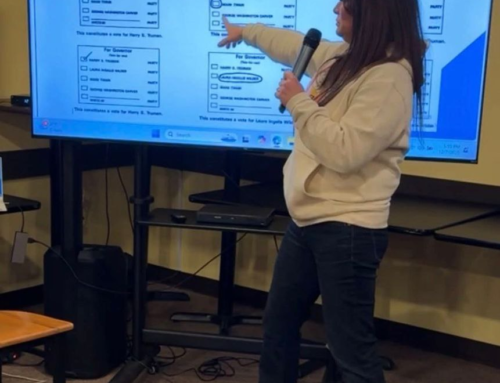
Yet current testing procedures across the state do not verify whether tabulators detect all legal distinguishing marks and expressions of voter intent. They don’t even attempt to. And when a public demonstration in Franklin County proved that the machines do not detect lawful marks, the response was not to fix the problem, but to defend it.
The argument boils down to this:
If the Secretary of State approved the machine, then I’m off the hook.
But that is not how Missouri law works.
The Secretary of State approves equipment.
The local election authority ensures that equipment actually counts votes.
These are separate duties assigned to separate offices. One does not erase the other.
The Stakes Are Higher Than One County
This is not just a Franklin County issue. It is a statewide warning flare.
If local election authorities can ignore the statutes that govern them—and hide behind statutes that don’t—then Missouri’s entire system of checks and balances collapses. The law becomes optional. Accountability evaporates. And voters lose the guarantee that their ballots will be counted according to the standards the legislature wrote, not the limitations a machine imposes.
Missouri’s Election Authorities Must Follow the Laws Written for Them
The law is not vague. The responsibilities are not shared. And the consequences of ignoring them are not abstract.
County election authorities are the last line of defense for ensuring that every legal vote is counted. They cannot outsource that duty to a machine, a vendor, or a statute written for someone else.
Voters in Missouri demand officials obey the laws that govern them—and don’t dodge accountability by invoking laws that don’t.
Tags: